Academic life in Groningen
A five-credit course can take 140 hours, even if it only appears on your timetable twice a week. Here’s how to plan the work between classes, get through your first group project and find a desk that suits the day.
Find your course catalogue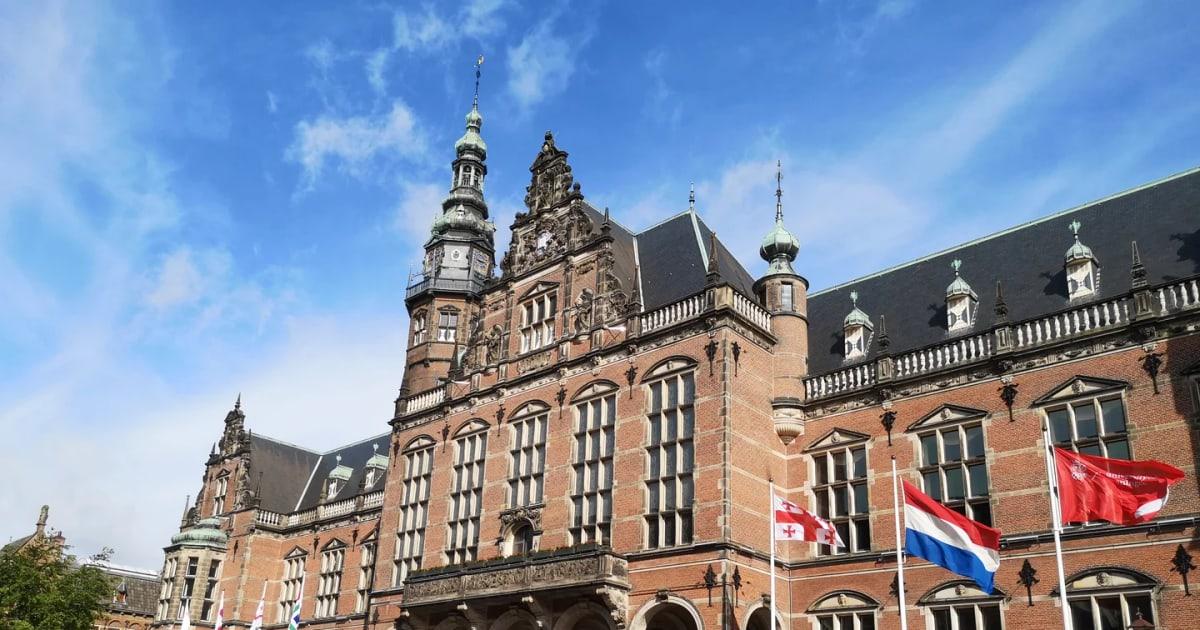
Where can I find my courses?
Start with your institution’s catalogue. Look up the current academic year, the teaching period and the assessment method before you put the course in your calendar.
University of Groningen (RUG)
The RUG is a research university. Its course catalogue is called Ocasys. Look up the course code to find out what you’ll study, how many credits it carries and how your work will be assessed.
Search OcasysHanze University of Applied Sciences
Hanze programmes connect theory with professional practice. A course might involve a group presentation, a project report or an exam. The Hanze ECTS catalogue lists degree programmes, exchange options and individual course units.
Search the Hanze catalogueWhat should I expect in a Dutch classroom?
Start a group project together
For a Hanze group presentation, read the assignment together before dividing up the slides. Check which parts are graded individually. Agree who will bring what to the next meeting and set aside time to rehearse the whole talk. That’s when you’ll hear whether everyone is answering the same question.
Ask what direct feedback means for your draft
Feedback in a Dutch seminar can sound quite direct. If a tutor says your argument is too broad, try asking, “Which claim would you narrow first?” You can question a comment or disagree with a classmate. Point to the passage or example that led you to a different conclusion.
Plan your independent study time
Your timetable shows contact hours. Leave time between classes for reading, preparing questions and drafting assignments. For a RUG seminar, bring a question and the pages that prompted it. For a Hanze group project, work backwards from the deadline so classmates can read your draft.
How do ECTS credits and Dutch grades work?
Allow time beyond class
A full-time year is normally 60 ECTS credits. At RUG and Hanze one credit represents 28 hours of work. For a five-credit course, those 140 hours include classes, reading, assignments and exam preparation.
Read your course’s pass rule
Dutch numeric grades run from 1 to 10. A 6 is a pass. Some courses accept a 5.5 or round it to a 6. Check whether you must pass each assessment separately and what happens if you need a resit.
Agree on credit transfer
If you’re here on exchange, send the course codes, descriptions and credit values to your home coordinator before finalising your choices. Ask how your home institution will record the Dutch grades.
What happens at the end of the first year?
If illness or personal circumstances affect your work, speak to your study adviser early. Bring your results and upcoming deadlines so you can discuss a realistic plan.
Binding study advice at RUG
For most full-time bachelor’s programmes, the first-year standard is 45 ECTS. Exceptions include University College Groningen. The binding study advice (BSA) determines whether you may continue your programme. Check your own Teaching and Examination Regulations for the exact requirements.
Read the RUG study advice rulesPersonal study advice at Hanze
Hanze calls its end-of-year review Personal Study Advice. You and your lecturers discuss your progress and plan the next stage of your bachelor’s degree. Your programme’s Education Regulations are available through its Brightspace page.
Check the Hanze student charterWhere can I find a quiet study space in Groningen?
Forum Groningen
At Nieuwe Markt 1, head to the west side of the eighth floor for a quiet study area. You’ll also find desks around the building, many with sockets. Look for the signs on the tables, since some are reserved for other visitors. Save your group call for another spot.
Find study places at ForumUniversity Library
During UG-only periods around exams, you need a reservation for a study place at the University Library. Check the dates before walking over to the city-centre library. If you’re meeting classmates, look for a bookable group studio.
Find a UG study placeHanze Library
The Zernike and Wiebenga libraries have quiet rooms for individual work. If you need to talk through slides with a project group, use the discussion areas outside the quiet rooms.
Explore Hanze library spacesWhich cafés are good for studying?
De Uurwerker
Uurwerkersplein 1, tucked behind the Harmonie Building. Laptops and books are welcome here. If you’re coming straight from class with a project partner, this is a handy place to talk through a draft over coffee.
Fernweh
Wouter van Doeverenplein 2, on the ground floor of the Libertas tower. You can walk in with your laptop and take an available shared desk. Budget for at least one order per person per hour. If you need a private booth for a call, those are booked separately and carry a fee.
Check Fernweh’s workspace options